The city of the future
Futuristic cities.
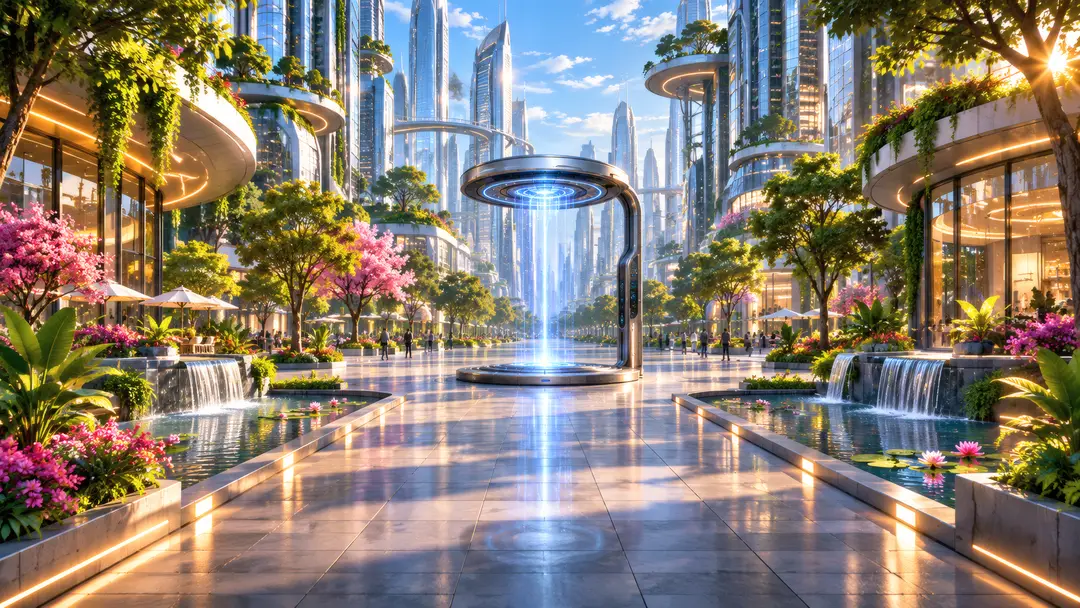
Built upward. Alive at every level. In Escaping the Galaxy, the megacity is one of three ways to live — next to orbital homes and homes in nature — and every one of them offers the same comfort. Some people simply feel most at home where life never stands still.
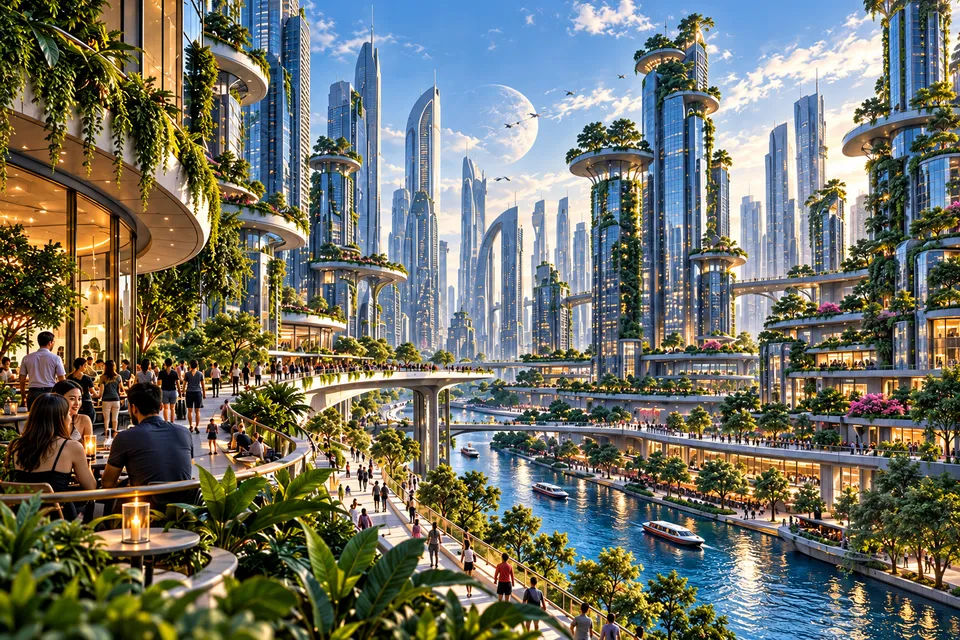
A city that makes room for nature.
Architecture reaches extraordinary heights, but nature stays part of the plan. Planted terraces, shaded streets and connected gardens help cool the city and support cleaner air. Gardens are part of daily life — not an escape from it.
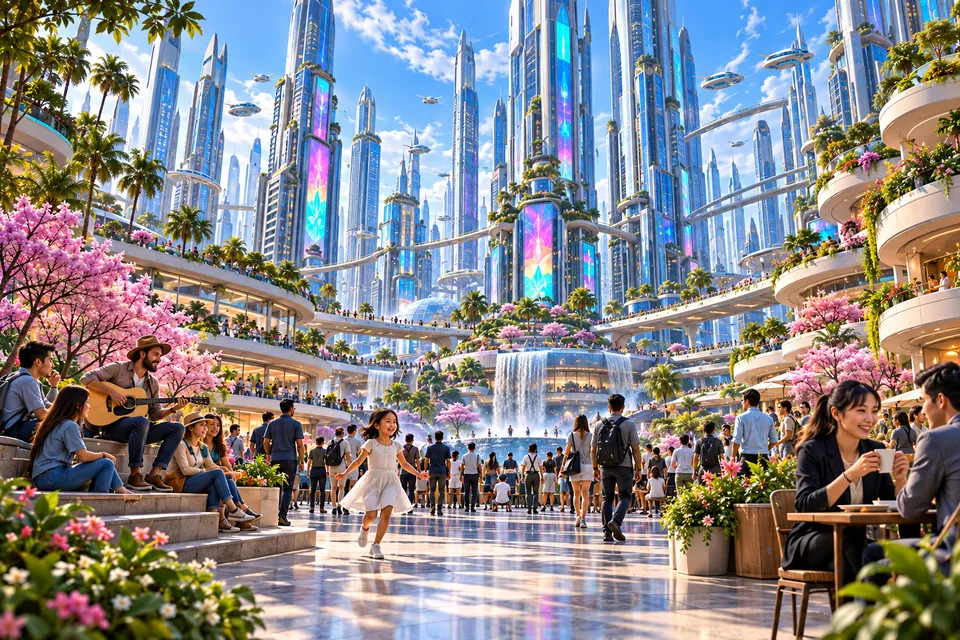
Life, with company.
Here, the crowd is part of the appeal. A quick coffee turns into a long conversation, a walk leads to a performance, and after dark friends meet above the skyline while the city finds another rhythm.
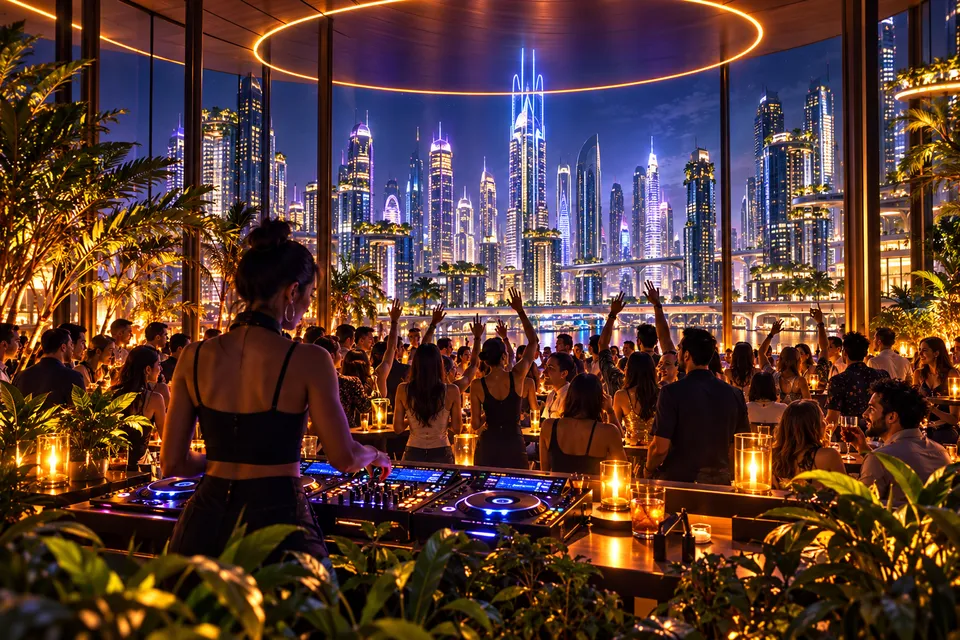
Minutes from anywhere.
In the books, a city is never a trap. With gateways and local teleports — like the City Teleport Node from Beyond Reality — friends are only minutes away, even when they chose a house in the mountains instead.
Which real cities look the most futuristic today?
There is no official ranking, but a few cities come up again and again. Singapore, where the tree-like Supertrees of Gardens by the Bay and greenery-covered towers come closest to a city that makes room for nature. Dubai, home of the Burj Khalifa — the world's tallest building — and the Museum of the Future. Shanghai, whose Pudong skyline includes the Shanghai Tower, one of the tallest buildings on Earth. And Tokyo, dense, efficient and famous for its trains.